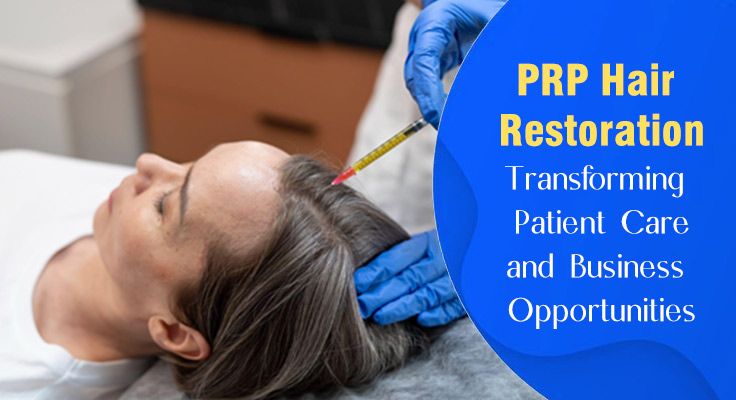
Hair loss is more than a cosmetic concern. It can significantly affect self-esteem, confidence, and overall quality of life. Traditional treatments, such as topical solutions or hair transplants, often provide inconsistent results or involve invasive procedures. PRP hair restoration is emerging as a scientifically backed, minimally invasive solution that addresses hair loss while also offering clinics a strategic opportunity to expand their services. This article explores the science behind PRP therapy, its clinical benefits, and the potential for medical practices to integrate it as a cornerstone of regenerative medicine.
Understanding PRP and Its Mechanism in Hair Restoration
Platelet-rich plasma (PRP) is derived from a patient’s own blood, concentrated to contain a high number of platelets and growth factors. These biologically active components are critical in tissue regeneration, repair, and cellular growth. When injected into the scalp, PRP stimulates dormant hair follicles, enhancing their capacity for natural growth.
PRP therapy is inherently autologous, meaning it uses the patient’s own biological material. This reduces the risk of immune reactions and complications while providing a highly personalized treatment. Clinics implementing evidence-based protocols, such as those outlined by PRP Treatment Clinic, can achieve consistent and safe outcomes, reinforcing patient trust and clinical credibility.
Essentially, PRP acts as a catalyst for hair follicle rejuvenation. The growth factors, such as platelet-derived growth factor (PDGF) and vascular endothelial growth factor (VEGF), promote vascularization and nutrient delivery to the follicles, supporting the natural hair growth cycle. This scientific foundation positions PRP as a regenerative, non-surgical alternative for patients seeking reliable hair restoration.
Clinical Effectiveness of PRP in Hair Regrowth
PRP therapy has demonstrated efficacy across multiple types of hair loss, including androgenetic alopecia, diffuse thinning, and early-stage hair recession in both men and women. Clinical evidence and patient-reported outcomes consistently show improvements in hair density, thickness, and scalp health following a series of PRP sessions.
Understanding the biological mechanisms is essential for practitioners. Platelets release a variety of growth factors that activate stem cells within hair follicles, enhance microcirculation, and prolong the anagen (growth) phase of hair. These effects collectively facilitate natural hair regeneration without relying on synthetic chemicals or invasive surgery.
Clinics that implement standardized PRP protocols achieve optimal treatment outcomes by adhering to evidence-based methodologies, ensuring consistency, safety, and high patient satisfaction. This positions PRP as a fundamental component of contemporary hair restoration practices.
PRP Hair Loss Therapy: Benefits Beyond Aesthetics
While hair regrowth is the primary goal, PRP therapy offers significant psychosocial benefits. Patients often report enhanced self-confidence, improved social interactions, and a better overall sense of well-being. Hair is a vital aspect of personal identity, and restoring its health can meaningfully impact quality of life.
Another advantage is the minimally invasive nature of PRP. Treatments involve only injections of autologous plasma, resulting in minimal downtime and reduced risk of adverse events. Recovery is typically brief, with minor swelling or tenderness resolving within days.
The term prp hair loss therapy highlights its effectiveness as a reliable, patient-focused solution. PRP can also be combined with complementary treatments, such as topical minoxidil or low-level laser therapy, to further enhance results. Clinics offering comprehensive regenerative services can use PRP to support both hair restoration and skin rejuvenation, improving patient satisfaction and positioning the practice as a leader in advanced aesthetic care.
Incorporating PRP into Clinical Practice
For medical and aesthetic practices, adding PRP hair restoration represents both a patient-focused service and a business growth strategy. Successful integration requires professional training, adherence to standardized protocols, and effective patient education.
Educational programs like Injector Training equip clinicians with the expertise needed to perform PRP injections safely and effectively. Training covers patient evaluation, injection techniques, and post-treatment care, ensuring clinical excellence and optimal outcomes. Practices that invest in practitioner education demonstrate credibility and a commitment to patient safety, reinforcing their reputation in a competitive market.
Offering PRP also differentiates a clinic’s services. Innovative, evidence-based therapies attract clients seeking advanced solutions, enhance patient retention, and generate opportunities for cross-referral to complementary treatments such as skin rejuvenation or anti-aging procedures.
Business Potential and Strategic Advantages
PRP hair restoration is not only clinically transformative but also commercially strategic. Regular treatment sessions provide a consistent revenue stream, while positive outcomes and patient satisfaction fuel referrals and long-term loyalty.
Marketing PRP as part of a holistic regenerative approach enables practices to create comprehensive wellness packages, combining hair restoration with aesthetic enhancements. By positioning PRP within a broader portfolio of regenerative services, clinics can expand their clientele and strengthen patient relationships.
In essence, PRP functions as both a clinical innovation and a business growth tool. Practices that adopt it effectively can differentiate themselves, attract new patient demographics, and establish a reputation for offering cutting-edge regenerative medicine solutions.
Safety, Protocols, and Patient Considerations
Although PRP is generally safe, patient selection and protocol adherence are critical. Candidates should undergo a thorough assessment to evaluate platelet levels, overall health, and suitability for treatment. Managing patient expectations is equally important, as multiple sessions may be required to achieve optimal results.
Strict adherence to established protocols is critical for achieving consistent and safe outcomes. This involves precise centrifugation, meticulous injection techniques, and rigorous sterile practices. Educating patients on realistic timelines and anticipated results fosters transparency, strengthens trust, and supports sustained satisfaction with the treatment.
Structured, evidence-based approaches guarantee that PRP delivers maximum therapeutic benefit while minimizing risks. Combining clinical expertise, patient-centered care, and scientifically validated protocols ensures optimal outcomes and enhances professional credibility.
Future Trends in PRP Hair Restoration
The field of PRP hair restoration continues to evolve. Advances in regenerative medicine, including combination therapies with stem cells or laser treatments, suggest the potential for enhanced efficacy and broader applications. Technological innovations, such as improved centrifugation devices and injection systems, enable more precise treatments with reduced variability.
As research progresses, PRP may become integral to multi-modal regenerative strategies for hair and scalp health. Increased patient awareness and demand for minimally invasive, natural therapies position PRP as a pivotal solution in the aesthetic and medical markets. The trajectory of PRP underscores its potential to redefine hair restoration standards and elevate patient care outcomes.
Conclusion
PRP hair loss therapy represents a convergence of clinical innovation and business opportunity. By stimulating natural hair regrowth and enhancing patient confidence, it addresses both the physical and psychological impacts of hair loss. For clinics, offering PRP enables differentiation, expansion of services, and sustainable revenue growth.
As regenerative medicine continues to advance, PRP will remain at the forefront of evidence-based, patient-centric hair restoration. Clinics that adopt this therapy with a focus on professional training, adherence to validated protocols, and comprehensive patient care are well-positioned to deliver transformative results. Ultimately, PRP is more than a treatment. It is a strategic, science-driven approach that elevates both patient outcomes and practice success.
Also Read : Mechanisms of Neurotoxicity in Prion Diseases: Insights into Protein Aggregation Disorders