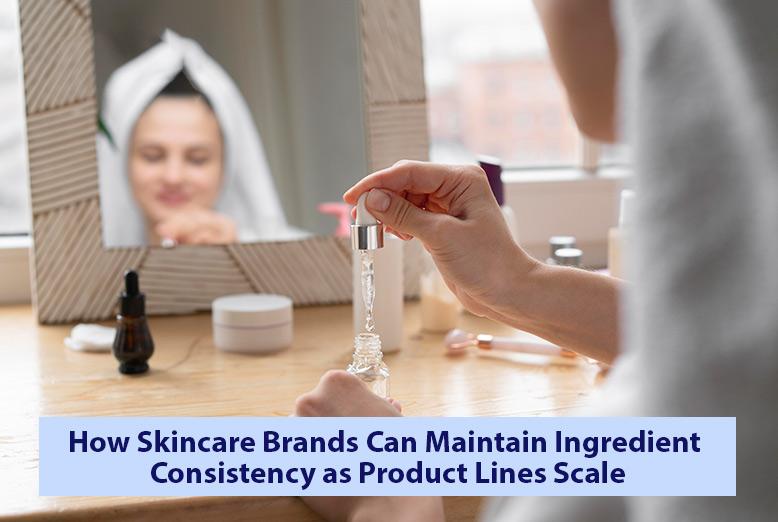
Maintaining ingredient consistency becomes increasingly challenging as skincare brands grow and expand their product lines. What works well for small batches can quickly become difficult to control at higher volumes. Variations in raw materials, changes in suppliers, and production scaling can all affect how a final product performs. For brands focused on long-term success, consistency is not just a quality concern but a trust issue. Consumers expect the same texture, scent, and results every time they repurchase a product, which makes reliable manufacturing practices essential. This is where experienced partners like Rainshadow Labs play an important role in helping brands preserve product integrity as they scale.
As demand increases, brands often introduce new SKUs, seasonal launches, or expanded distribution channels. Each change introduces new pressure on sourcing, production, and quality control systems. Without proper safeguards, even minor ingredient variations can lead to noticeable differences that impact customer satisfaction.
This article explores why ingredient consistency matters, the challenges brands face as they grow, and the strategies that help ensure reliable, repeatable skincare products at scale.
Why Ingredient Consistency Matters to Consumers
Consistency directly influences consumer trust. When customers find a product that works for their skin, they expect it to deliver the same experience every time. Even small changes in color, fragrance, or texture can raise concerns about quality or formulation changes.
In skincare, consistency also affects performance. Active ingredients must be present at precise levels to deliver expected results. Variations can reduce effectiveness or cause irritation, especially for customers with sensitive skin. Maintaining uniformity protects both brand reputation and customer confidence.
The Challenges of Scaling Skincare Production
Scaling production introduces complexity at every stage of manufacturing. Ingredient availability may fluctuate due to seasonal harvests or supplier limitations. As order volumes increase, brands may need to source larger quantities, which can lead to changes in ingredient batches.
Production equipment also plays a role. Processes that work for small batches may behave differently at higher volumes. Mixing times, temperatures, and ingredient dispersion must be carefully adjusted to ensure formulas remain stable and uniform.
Without experienced oversight, these changes can lead to inconsistency across batches.
Sourcing Reliable Raw Materials
Ingredient consistency begins with sourcing. High-quality manufacturers establish relationships with trusted suppliers who meet strict quality standards. These suppliers provide detailed specifications, certificates, and traceability for every ingredient.
Consistency also depends on selecting ingredients with stable properties. Natural ingredients can vary due to climate, soil, and harvesting conditions. Managing these variables requires careful evaluation and testing to ensure they perform consistently within a formulation.
Reliable sourcing strategies reduce surprises during production and support predictable outcomes.
Standardized Formulation Processes
Standardization is critical when scaling skincare products. This includes precise measurements, documented procedures, and controlled production environments. Every step—from ingredient weighing to mixing order—must be clearly defined and consistently followed.
Standard operating procedures help ensure that products are made the same way every time, regardless of batch size. They also allow manufacturers to quickly identify and correct deviations before products reach customers.
Brands that rely on standardized processes experience fewer quality issues as they grow.
Quality Control at Every Stage
Quality control is not a single checkpoint; it is an ongoing process throughout production. Raw ingredients must be inspected upon arrival, formulas tested during manufacturing, and finished products evaluated before release.
These checks help identify inconsistencies early. Testing for pH, viscosity, appearance, and stability ensures that each batch meets established benchmarks. Without consistent quality control, small variations can go unnoticed until customers report problems.
Strong quality control systems protect brands from costly recalls and reputational damage.
Manufacturers with established quality systems and scalable processes help brands navigate these challenges effectively. Rainshadow Labs supports growing skincare companies by maintaining strict ingredient standards and controlled production methods that preserve consistency across expanding product lines.
Managing Supplier Changes Without Disruption
As brands scale, supplier changes may become unavoidable. A key ingredient may become unavailable, discontinued, or delayed. When this happens, substitutions must be handled carefully.
Manufacturers test alternative ingredients thoroughly to ensure they match performance, safety, and stability requirements. Proper documentation and validation prevent unintended changes to the final product. Transparent communication with brands ensures decisions align with product goals.
Careful management of supplier transitions helps maintain consistency even during unexpected changes.
Batch Tracking and Documentation
Batch tracking systems allow manufacturers to trace every product back to its ingredient sources and production conditions. This level of documentation is essential for identifying trends or resolving issues quickly.
If a variation occurs, batch records help pinpoint the cause. This allows corrective actions to be implemented efficiently and prevents repeat issues. Documentation also supports regulatory compliance and builds confidence with retailers and consumers.
Brands that prioritize traceability are better equipped to scale responsibly.
Equipment and Facility Considerations
Scaling production often requires larger or additional equipment. Mixing tanks, filling lines, and storage systems must be compatible with the formula’s properties. Equipment upgrades must be tested to ensure they do not alter product characteristics.
Facility conditions such as temperature, humidity, and cleanliness also influence consistency. Controlled environments reduce contamination risks and support stable production outcomes.
Well-maintained facilities are a cornerstone of consistent manufacturing.
Communication Between Brand and Manufacturer
Clear communication ensures that growth does not compromise quality. Brands must share future plans, expected volume increases, and new product ideas early. This allows manufacturers to prepare sourcing, staffing, and equipment accordingly.
Regular communication also helps align expectations around timelines, formulation adjustments, and testing requirements. Strong partnerships reduce surprises and support smooth scaling.
When communication is consistent, consistency follows.
Consumer Feedback as a Consistency Indicator
Customer feedback provides valuable insight into product consistency. Reviews mentioning changes in texture, scent, or performance often signal underlying production issues.
Brands that monitor feedback closely can address concerns quickly. Manufacturers can review batch records, test samples, and identify potential causes. This proactive approach helps maintain trust and improve future production.
Listening to customers is an essential part of maintaining consistency.
Preparing for Long-Term Growth
Consistency becomes more critical as brands expand into new markets or distribution channels. Retailers and international partners expect products to meet the same standards across regions.
Preparing for long-term growth means investing in scalable systems early. Brands that plan ahead avoid rushed decisions that compromise quality. Reliable manufacturing partners provide the infrastructure needed to support expansion without sacrificing consistency.
Conclusion
Ingredient consistency is a defining factor in the long-term success of skincare brands. As product lines scale, maintaining uniformity requires careful sourcing, standardized processes, rigorous quality control, and clear communication. Experienced manufacturers help brands manage growth while preserving the qualities customers trust. By working with partners like Rainshadow Labs, skincare companies can expand confidently, knowing their products will deliver the same reliable performance at every stage of growth.
Also Read: How Did Vineeta Singh’s Net Worth Reach ₹300 Crores?