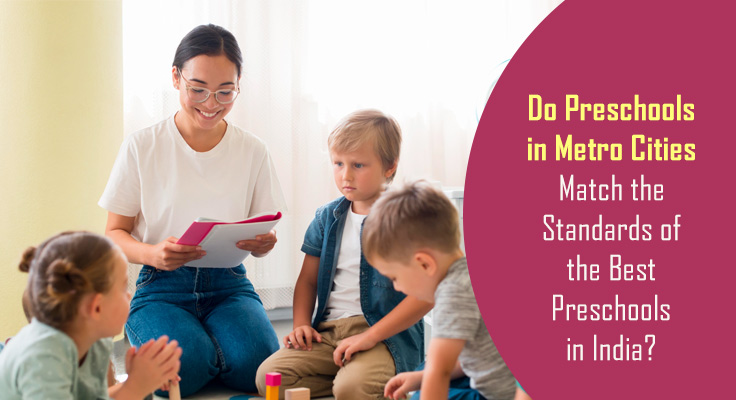
Walk into any metro city preschool today, and you’ll see bright classrooms, CCTV screens, and glossy prospectuses. The marketing is loud, but parents care about quieter things: safety, learning, and whether a child feels secure. Early years shape lifelong learning and wellbeing. So, do preschools in India’s metro cities match the standards set by the best preschools in the country? Many do. Some don’t, in practice. The gap usually comes down to leadership, teacher quality, and consistency.
What “best standards” mean in the Indian preschool space
In early years education, “best” should not mean expensive. It should mean developmentally sound, child-centred, and aligned with the spirit of India’s focus on the foundational years. In strong preschools, you typically see:
- Play-based learning with a steady routine: free play, guided activity, outdoor movement, story time, and calm transitions.
- Warm, responsive teachers who know each child and handle emotions without shaming.
- Safe, clean spaces: child-friendly toilets, supervised pickup, first aid readiness, and clear food policies.
- Healthy teacher-to-child ratios and stable staffing, so children don’t keep “starting over”.
- Useful parent communication: not only photos, but notes on language, social skills, and emerging interests.
When these pieces align, children settle faster and learn better.
These are standards in action, not in brochures. They show up on a regular Tuesday, not only on the annual day.
Where metro preschools often meet or exceed the best
Most metros have a deep supply of preschools. Competition can push centres to upgrade training, facilities, and programmes. Many metros also attract educators who have worked across boards and early learning centres, which can raise teaching quality.
In a well-run metro preschool, you’ll often find structured teacher development, clear child safeguarding policies, and systematic observation of milestones. There is also better access to specialists who can guide teachers and parents when a child needs support.
Another advantage is diversity. Metro classrooms usually include children from different languages and cultures, and good schools use this as a learning asset through inclusive stories, respectful celebrations, and daily routines that build empathy.
Where metros can fall short
Metro preschools sometimes drift into “schoolification”: pushing reading and writing early because parents expect visible output. Worksheets, long circle times, and homework for three-year-olds still exist, even in premium settings. The best preschools resist this pressure and focus on readiness: fine motor strength, listening skills, vocabulary, confidence, and self-help habits.
Teacher turnover is another weak spot. Metros have higher living costs and more job movement, so some centres struggle to retain trained staff. Frequent changes affect attachment and classroom stability, especially for younger children.
Space can be a constraint too. Smaller outdoor areas and tight classrooms are common in metros. The best centres compensate with smart schedules: movement breaks, sensory corners, and daily outdoor time, even if the play area is compact. Poorer centres simply reduce active play, which children need for regulation and learning.
Finally, metros can over-index on branding. A franchise may deliver quality in one branch and disappoint in another if the local team is weak. The best preschools keep standards steady because processes are strong and leadership watches the basics closely.
A parent’s lens: judging standards in one visit
If you’re comparing options, don’t start with fees. Start with what you can see and hear. During a short visit, look for signals like these:
- Teachers get down to eye level and speak gently, even while correcting behaviour.
- Children are busy, not rushed, moving between activities with clear cues rather than shouting.
- Materials invite exploration: blocks, puzzles, pretend play, and art supplies that children can reach.
- Safety is real: controlled entry, clean floors, covered sockets, and a calm pickup system.
- The room feels lively, not chaotic. Happy classrooms have noise; they should still feel managed.
Ask to see the daily schedule, staff qualifications, and how the centre handles emergencies well.
If you’re exploring a preschool in Bangalore, for example, you may notice many centres offering “international” programmes. Instead of focusing on the label, ask how teachers use play to build language, number sense, and social skills across the day.
What the best preschools do, regardless of city
Across India, the strongest preschools share habits that travel well from metro to non-metro settings.
They hire for attitude and train for skill. A teacher who enjoys young children, listens well, and stays patient can be trained in pedagogy. A teacher who dislikes the age group cannot.
They treat parents as partners. Clear updates, transparent policies, and honest conversations about behaviour and development build trust. They don’t promise “fluent reading” by age four; they explain readiness and why it matters.
They protect childhood. Strong schools use early years methods: songs, movement, messy play, storytelling, and hands-on activities. They also build life skills: waiting for a turn, washing hands, packing a bag, and speaking up politely.
The takeaway
Metro preschools often have the resources to match top standards, and many do. Yet “best” belongs to centres, metro or not, that deliver consistent care, strong teaching, and a child-friendly pace. If a preschool prioritises relationships, play, safety, and teacher stability, it can stand shoulder to shoulder with the best preschools in India, even from a modest building. Quality is not a city feature. It’s a daily choice made by the adults in the room.
Also Read: South Korea is testing robots in preschools to prepare youngsters for a high-tech future