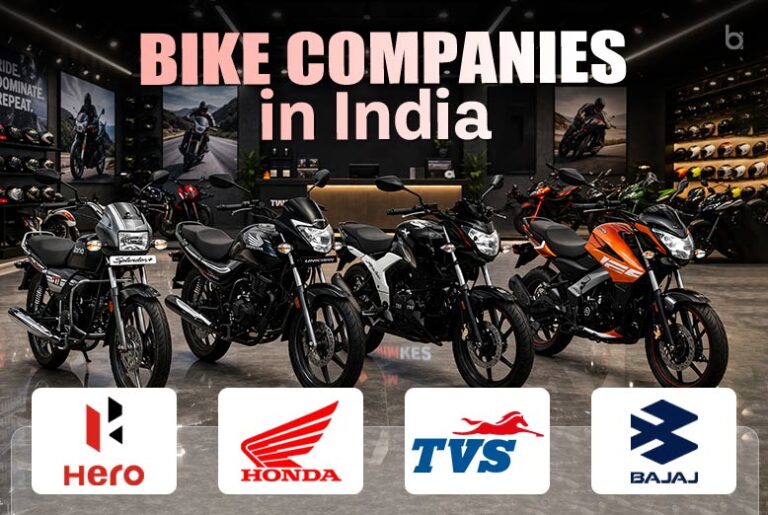
The competition among bike companies in India is evolving at a pace many riders still underestimate. New technologies, electric innovation, and premium upgrades now redefine what a bike truly offers. Therefore, missing these shifts could mean overlooking the most exciting phase in modern motorcycling. For enthusiasts, this moment goes beyond machines. It shapes identity, performance expectations, and long-term value.
This article explores the most influential brands shaping the Indian two-wheeler market today. It explains brand positioning, financial strategies, and consumer appeal in clear and simple language. Moreover, it examines the contrast between Indian and international players and the trends driving growth in 2026. As a result, readers will gain sharp insights into which brands lead, which ones evolve, and what defines success in this highly competitive landscape.
Indian vs International Brands in the Indian Two-Wheeler Market
Among bike companies in India, the split between Indian-owned and international-owned brands shapes price, product, and reach. Indian names such as Hero, TVS, Bajaj, Royal Enfield, Ola Electric, and Ather usually lead on scale, value, and local demand. SIAM says FY 2025-26 closed with record two-wheeler sales of 2.17 crore units, up 10.7 percent, and record two-wheeler exports of 51.8 lakh units, up 23.4 percent. That shows Indian brands now compete strongly at home and abroad.
International brands take a different route. Honda says HMSI is a wholly owned subsidiary of Honda Motor Company. Suzuki and Yamaha also describe their India arms as subsidiaries of their Japanese parents. Reuters also reported Bajaj’s deepening role in KTM, which strengthens KTM’s India manufacturing and reach. As a result, global brands usually win on refinement, premium feel, and engineering depth. Indian brands often win on localisation, pricing, and faster responses to local buyers. In this market, the strongest players now combine both strengths.
Industry Insights and Trends in the Indian Two-Wheeler Market
For bike companies in India, electrification now drives the next phase of growth. SIAM says the PM E-DRIVE scheme carries an outlay of ₹10,900 crore and runs through 31 March 2026. It aims to speed up EV adoption, charging infrastructure, and EV manufacturing. SIAM’s 2026 design paper also says India contributes about 7.1 percent to GDP and 49 percent to manufacturing GDP. It also calls India the world’s largest two-wheeler market.
The numbers match that shift. SIAM said FY 2025-26 two-wheeler sales reached 2.17 crore units, and Q4 sales hit 57.73 lakh units, both record highs. It also said urban demand led the recent growth, while exports stayed strong at 51.8 lakh units. Therefore, the market now rewards more than volume. It rewards mileage, service quality, connected features, safety, and EV readiness. That is why the best brands in 2026 build for both daily commuters and future mobility.
Here are the top 10 bike companies in India
| Company | Basis of Ranking | Popular Models |
| Hero MotoCorp | Domestic Sales (30%+ Share) | Splendor Plus, Xtreme 125R |
| Honda (HMSI) | Market Share Growth (29%) | Activa 6G, Shine 125 |
| TVS Motor | Balanced Growth (Sales) | Apache RTR 160, Raider 125 |
| Bajaj Auto | Export Revenue & Market Cap | Pulsar NS200, Dominar 400 |
| Suzuki India | Scooter Segment Sales | Access 125, Gixxer SF 250 |
| Royal Enfield | Premium Segment Lead (>350cc) | Classic 350, Hunter 350 |
| Yamaha India | Performance Niche Sales | R15 V4, MT-15 V2 |
| Ola Electric | EV Market Share | S1 Pro, Ola Roadster |
| KTM India | Sports Segment Revenue | Duke 390, RC 200 |
| Ather Energy | EV Premium Sales | 450X, Rizta |
1. Hero MotoCorp
Hero MotoCorp leads the mass commuter segment with unmatched scale and reach. It focuses on affordability, fuel efficiency, and rural penetration. Therefore, it dominates entry-level motorcycles and daily commuting needs across India.
Moreover, the company invests in electric mobility and global expansion. It balances volume with steady margins, which strengthens investor confidence. As one of the largest bike companies in India, Hero builds trust through reliability and low ownership costs. Consequently, its positioning stays rooted in value leadership while it slowly moves toward premium innovation.
2. Honda (HMSI)
Honda Motorcycle & Scooter India positions itself on refinement, durability, and engineering precision. It emphasizes smooth engines and consistent performance. As a result, it appeals strongly to urban riders and families.
In addition, Honda uses global technology to maintain quality benchmarks. It focuses heavily on scooters, which boosts its market share. While competition rises, Honda protects margins through brand trust and scale. Therefore, it stands as a reliable premium commuter choice. Its disciplined strategy reflects long-term stability rather than aggressive expansion.
3. TVS Motor Company
TVS Motor Company blends performance with affordability across segments. It actively competes in scooters, commuters, and sporty motorcycles. Therefore, it attracts both young and practical buyers.
Furthermore, TVS invests heavily in innovation and racing technology. It also expands in electric mobility with a strong product roadmap. As one of the evolving bike companies in India, TVS builds a premium image gradually. Its partnership-driven strategy supports global reach. Consequently, it balances growth with improving profitability and brand perception.
4. Bajaj Auto
Bajaj Auto positions itself as a performance-driven yet value-conscious brand. It focuses on sporty motorcycles and exports heavily. Therefore, it earns strong margins compared to peers.
Additionally, Bajaj benefits from its partnership with KTM. This collaboration enhances its premium portfolio and technology access. It also leads in three-wheelers globally. As a result, Bajaj builds a diversified revenue stream. Its strategy clearly favors profitability over volume dominance. Consequently, it maintains a sharp financial discipline in a competitive market.
5. Suzuki Motorcycle India
Suzuki Motorcycle India focuses on reliability and refined riding experience. It builds its brand around smooth engines and consistent quality. Therefore, it attracts practical urban consumers.
Moreover, Suzuki strengthens its scooter portfolio steadily. It avoids aggressive expansion and instead focuses on product quality. While its market share stays moderate, its brand loyalty remains strong. As one of the quieter bike companies in India, Suzuki plays a long-term game. Consequently, it builds trust rather than chasing rapid growth.
6. Royal Enfield
Royal Enfield commands the mid-size premium segment with a heritage-driven identity. It focuses on lifestyle, community, and long-distance touring. Therefore, it creates emotional brand loyalty.
In addition, Royal Enfield expands globally with modern platforms. It improves quality while retaining classic design language. As one of the most iconic bike companies in India, it leads the 350cc and above category. Consequently, it enjoys high margins and a cult following. Its positioning blends nostalgia with modern engineering.
7. Yamaha Motor India
Yamaha Motor India builds its identity around performance and sporty design. It targets younger riders who seek style and speed. Therefore, its motorcycles often stand out visually.
Furthermore, Yamaha leverages global racing DNA in its products. It limits mass-market focus and instead sharpens its premium appeal. While volumes remain controlled, brand recall stays high. Consequently, Yamaha strengthens its niche positioning. Its strategy clearly prioritizes aspirational value over aggressive market share expansion.
8. Ola Electric
Ola Electric disrupts the market with a digital-first and EV-focused approach. It emphasizes affordability, technology, and direct-to-consumer sales. Therefore, it reshapes buying behavior.
Additionally, Ola invests in large-scale manufacturing and battery innovation. It aims to reduce costs through vertical integration. As a new-age bike company in India, it challenges traditional players strongly. However, it must improve service and reliability. Consequently, its long-term success depends on execution and customer trust.
9. KTM
KTM positions itself as a high-performance and racing-focused brand. It appeals to enthusiasts who seek speed and aggressive design. Therefore, it dominates the entry-level performance segment.
Moreover, KTM benefits from local manufacturing through Bajaj Auto. This reduces costs and improves accessibility. While its pricing stays premium, demand remains strong among young riders. Consequently, KTM builds a powerful aspirational image. Its focused strategy keeps it distinct from mass-market competitors.
10. Ather Energy
Ather Energy positions itself as a premium electric mobility brand. It focuses on performance, smart features, and user experience. Therefore, it attracts urban and tech-savvy buyers.
In addition, Ather builds its own charging infrastructure and software ecosystem. It prioritizes quality over rapid expansion. As a forward-looking bike company in India, it sets benchmarks in EV innovation. Consequently, it earns strong brand loyalty. Its disciplined growth strategy reflects long-term sustainability and technological leadership.
End Note
The competitive landscape among bike companies in India now reflects a deeper structural shift rather than a temporary trend. Traditional strengths such as affordability and fuel efficiency still matter. However, premiumization, electrification, and brand storytelling now influence buyer decisions more strongly.
Indian manufacturers show increasing strategic maturity through global expansion and EV investments. At the same time, international brands continue to leverage engineering depth and brand legacy. Consequently, the market no longer rewards scale alone. It rewards clarity of vision, adaptability, and consistent execution. In this evolving environment, only those brands that balance innovation with trust will sustain long-term relevance.
Tejas Tahmankar
FAQ’s
1. Which bike company offers the best value for money in India?
Brands like Hero MotoCorp, TVS Motor Company, and Bajaj Auto often deliver strong value for money. They balance pricing, fuel efficiency, and maintenance costs effectively. Therefore, they suit daily commuters and budget-conscious buyers.
2. Which are the top 5 most popular bike companies in the world?
Globally, leading motorcycle brands include Honda Motor Co., Ltd., Yamaha Motor Company, Harley-Davidson, Kawasaki Heavy Industries, and BMW Motorrad. These brands dominate through global reach, advanced engineering, and strong brand identity.
3. What factors should buyers consider before choosing a bike company?
Buyers should compare mileage, pricing, service network, and resale value. Moreover, they should check performance, safety features, and maintenance costs. Therefore, the final choice depends on usage, budget, and riding needs.