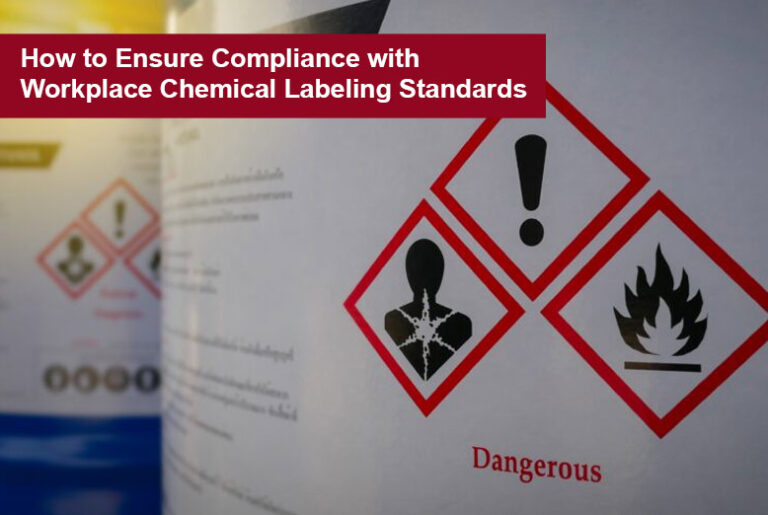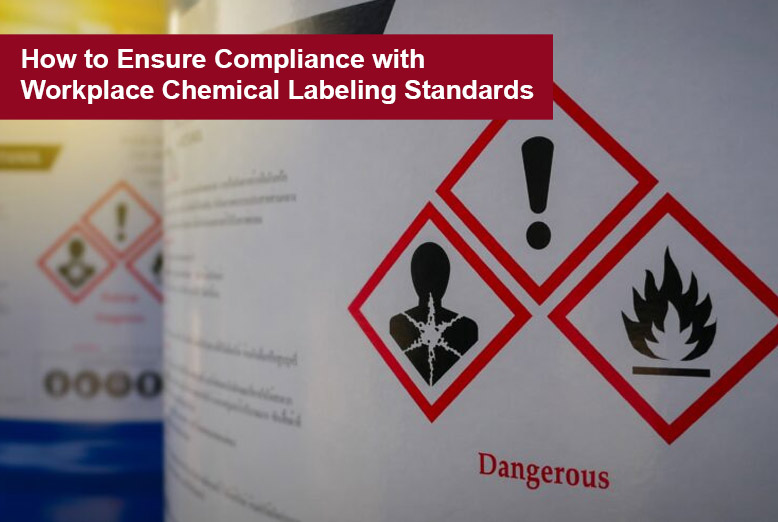
Chemical labelling in the workplace is one of the ways of ensuring that employees are not exposed to chemical injuries and regulatory breaches. Labeling hazards will give important information about hazards in a clear and correct manner so that the workers can recognize the dangers and take necessary measures. Even simple tasks can cause potentially hazardous confusions, mishandling, or substances that cannot be mixed together when these are not properly labeled.
This is because a controlled strategy is necessary to ensure adherence to chemical labeling standards and this is in line with the regulatory needs and internal policies on safety. The employers should be aware of the rules to follow, labeling procedures should be consistent, employees should be trained properly and the compliance should be followed in the long run. An efficiently run labeling system helps achieve safer operations and lessens the chances of expensive enforcement measures.
Understanding Regulatory Requirements
Compliance starts with the knowledge of the regulatory framework upon which the chemical labeling in the workplace operates. A variety of jurisdictions have hazard communication standards that specify how chemicals should be labeled such as hazard pictograms, signal words, precautionary statements and supplier information. It is the responsibility of employers to determine what regulations govern their activities and abide by such legal requirements in the labeling practices.
It can be helpful to review official guidance documents and compliance materials and clarify expectations. Safety Data Sheets give the necessary classifications of hazards, which should be displayed on the labels of containers. By aligning the labeling system with these classifications, the companies will have such consistency between what is written and what is marked on the ground, which enhances the safety and compliance initiatives.
Establishing a Standardized Labeling System
In chemical labelling in the workplace, there must be consistency. A standardized format should be developed to use as primary and secondary container labels so that they do not create confusion. The primary containers, which are received by the suppliers normally contain manufacturer labels that conform to regulatory standards and secondary containers that are filled at the place must also be able to contain relevant hazard information.
The uniform system will guarantee that all containers have the product identification and hazards warnings in a standard and readable format. The labels must be strong to survive the environmental forces of the workplace such as moisture, change of temperature and even exposure to chemicals. Proper sizing and clarity in printing of the print assist in making the important information to be read even in the lifecycle of the product.
Managing Secondary Containers
Secondary containers are prone to comply with since they are filled by employees so that they can be used on a temporary or short term basis. On occasion, labeling requirements can be required even in the event of transfers of chemicals to be worked upon immediately in accordance with the local laws and workplace policies. The implementation of a clear procedure in labeling the secondary containers minimises the chances of having unmarked or wrongly marked bottles and spray containers.
Compliance: The employers should offer standardized templates or ready-to-use labels to make compliance easier. Supervisors are able to support good practices by making spot checks and filling gaps as they occur. When the employees are made aware that even minor containers need proper hazard communication, then they can easily follow the laid down rules and regulations.
Integrating Labeling with Safety Programs
The chemical labelling cannot be used in isolation of the larger-scale plans of safety in the work place. Training on hazard communication should also involve the style of understanding the elements of labels like pictograms, signal words, and precautionary statements. Before the employees work on any substance, they should know the safety measures to be taken and how to recognize hazards.
It should also be integrated with emergency preparedness. As an illustration, labels which identify corrosive materials warn workers of the necessity to have emergency equipment available immediately in case of exposure like the safety showers and eyewash stations. Labeling in relation to training and emergency planning is a practical tool as opposed to a mere compliance requirement.
Conducting Regular Inspections
Regular inspections should be done to ensure compliance in labeling. Labels can be lost, corroded or written off with time or use of environmental factors or daily use. Breakthroughs will enable the safety personnel to detect damaged or missing labels and replace them before they cause any hazard or regulatory issue.
The records of inspection allow showing the active approach of compliance. Keeping a written record of regular reviews may prove useful when auditing by a regulator or conducting an internal audit. Monitoring can help maintain the effectiveness of labeling standards over time since inventory levels and business processes will vary.
Training and Accountability
Training of the employees is one of the main elements in labeling compliance programs. Employees should know the reasons behind labeling standards and ways to use them properly in their everyday activities. Both regulatory expectations and company specific procedures such as the way to get replacement labels and where to access updated hazard information should be discussed during training.
The compliance is supported by accountability measures. Managers and supervisors are expected to set a proper example and speak about the lack of proper conduct. With the help of clear expectations, along with periodic refresher training, a culture of proper labeling being perceived as a crucial component of workplace safety is established instead of administrative overhead.
Continuous Improvement
Conditions at work and regulatory demands might change with time and thus labeling practices should be reviewed periodically. Organizations are expected to determine whether the current system is in line with the newly changed standards and operational requirements. Employee feedback may indicate some practical difficulties that might necessitate changes in either label design or positioning.
Constant upgrading activities could prevent the systems used to label the products to be contaminated, worn-out and ineffective. Choosing to treat compliance as a constant process and not a one time project would ensure that employers minimize the chances of encountering chemical related accidents and create an image that they are concerned about health and safety.