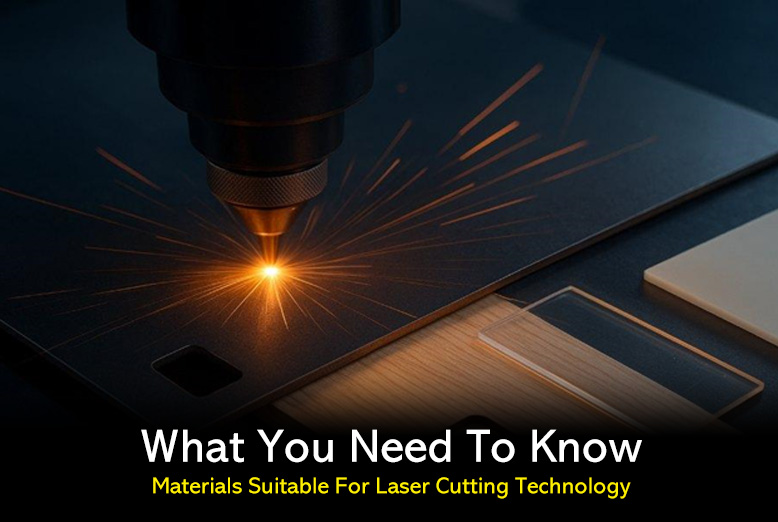
Laser cutting technology has transformed material processing with unmatched precision, speed, and automation. Using focused beams from fiber or CO₂ lasers, CNC laser cutting systems powered by CAD/CAM software can create complex designs across industries like automotive, aerospace, and electronics. The process also supports applications such as engraving, marking, etching, welding, and 3D cutting.
These systems generate a coherent laser beam through diodes, resonators, or fiber-optic sources, which are focused to melt or vaporize materials with high accuracy. Industry leaders like Trumpf, IPG Photonics, Coherent, and Han’s Laser continue to advance the field through improved beam control, modulation, and robotic automation for greater efficiency and precision.
Key Properties That Make Materials Suitable for Laser Cutting
Absorption of Laser Wavelength
Wavelength selection is crucial in laser cutting, as different lasers emit at distinct wavelengths that suit specific materials. Fiber lasers (≈1.06 μm) are ideal for reflective metals, while CO₂ lasers (≈10.6 μm) work best for organic materials like wood and plastics. Proper wavelength matching ensures efficient energy absorption, faster cutting, and fewer defects.
Thermal Conductivity and Melting Point
Materials with high thermal conductivity dissipate heat quickly, which can be challenging for localized laser cutting but advantageous for reducing thermal distortion. Conversely, materials with lower melting points tend to vaporize or melt easily, facilitating smoother cuts but susceptible to excess melting, which may deteriorate cutting quality.
Reflectivity and Surface Finish
Highly reflective materials, such as some stainless steels and aluminum alloys, require special attention due to potential beam reflection that could damage the laser optics or reduce cutting efficiency. Using a fiber laser with optimized optical fiber delivery and advanced laser beam modulation can mitigate these issues.
Thickness and Homogeneity
Material thickness impacts the choice of laser type and power output. Thicker materials demand higher-power lasers and precise beam focusing strategies. Homogeneous materials ensure uniform cutting without irregularities or interruptions.
Common Materials Used in Laser Cutting: Metals, Plastics, Wood, and More
Metals
Fiber lasers are essential in metal fabrication, precisely cutting stainless steel, aluminum, brass, and more with minimal heat impact. Advanced systems from IPG Photonics, Laserline GmbH, and nLight, Inc. use inert gases like nitrogen or argon for clean, oxidation-free edges, delivering superior accuracy and efficiency compared to plasma cutting.
Plastics and Polymers
CO2 lasers dominate the processing of organic materials due to favorable absorption at 10.6 μm. Plastics such as acrylic, polycarbonate, and polyethylene are widely laser cut for applications like signage and prototype development. Challenges include the potential for melting or thermal discoloration, which necessitates careful laser power control and beam modulation strategies.
Wood and Paper
Wood cutting and engraving utilize CO2 laser technology for both functional and aesthetic purposes. Laser engraving and etching enable intricate designs with high repeatability. However, the varied density of wood species requires adaptable laser control systems to maintain consistent cutting quality. Managing the heat-affected zone is critical to preventing charring or warping.
Composite Materials and Others
Emerging materials in additive manufacturing and layered composites present unique challenges, often requiring advanced 3D laser cutting techniques and hybrid systems incorporating laser welding. Processing these materials demands precise control of cutting speed and temperature to avoid delamination.
Tips for Choosing the Right Material for Your Laser Cutting Project
Selecting the optimal material involves balancing functionality, aesthetics, and compatibility with your laser cutting equipment.
- Evaluate Material Compatibility: Confirm the material’s absorptivity relative to your laser source’s wavelength. If cutting reflective metals, prioritize fiber laser systems with advanced optical fiber delivery.
- Consider Thickness and Complexity: Thicker materials may necessitate higher power and slower cutting speeds, achievable through cutting-edge lasers from manufacturers like Bystronic and Mazak Optonics.
- Understand Project Requirements: For detailed engraving or microfabrication, factors like laser beam modulation and beam focusing become essential to achieve desired resolutions.
- Incorporate Automation: Work with systems featuring sophisticated laser control systems and automation robotics to maintain precision cutting and optimize throughput.
- Consult Equipment Providers: Suppliers such as Amada Co., Ltd. and Han’s Laser not only provide hardware but also valuable guidance regarding material suitability and process optimization.
For reliable laser cutting machinery suited to diverse materials, consider exploring Acra Machinery, which offers a variety of industrial laser solutions tailored for optimal performance across applications.
By understanding the interplay between material properties, laser parameters, and technological capabilities, manufacturers and designers can maximize the benefits of laser machining, ensuring high-quality outcomes in material processing and metal fabrication projects.
Also Read: Top Industrial Applications of Fiber Laser Welding Technology