In a world where geopolitical tensions and regional conflicts can disrupt global oil supply overnight, energy security has become a strategic priority for every major economy. When wars affect shipping routes or crude exports, countries that depend heavily on imported fuel feel the impact almost immediately. India is no exception. As one of the fastest-growing energy consumers, the country relies on a strong network of companies that refine, distribute, generate, and manage energy resources efficiently. This is where the top oil and gas companies in India and the broader energy ecosystem play a critical role
From large refining giants to power producers and renewable innovators, these organizations ensure that industries run, transportation moves, and households stay powered. This blog explores the best oil and gas companies in India, highlighting their headquarters, core expertise, historical legacy, and future strategies. Together, they reveal how India’s energy leaders are adapting to global uncertainty while preparing for a more diversified and sustainable energy future.
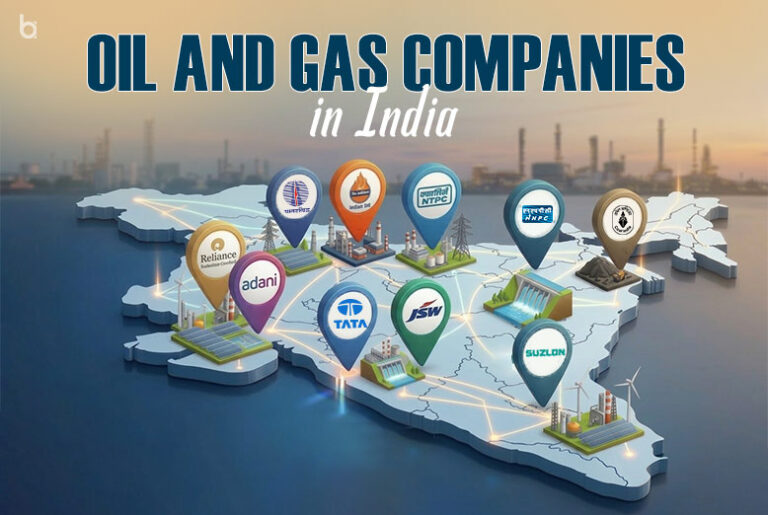
Here are the best oil and gas companies in India
| Company | Headquarters | What They Are Known For |
| Reliance Industries Limited | Mumbai, Maharashtra | World-scale refining and petrochemicals; Jamnagar refinery (largest refinery complex) |
| NTPC Limited | New Delhi | India’s largest electricity generator; thermal power plants |
| Power Grid Corporation of India | Gurugram, Haryana | India’s largest electricity transmission network operator |
| Tata Power | Mumbai, Maharashtra | Major private integrated power company; renewable expansion |
| Adani Green Energy | Ahmedabad, Gujarat | One of the world’s largest solar power developers |
| JSW Energy | Mumbai, Maharashtra | Independent power producer with thermal and renewable assets |
| Indian Oil Corporation | New Delhi | India’s largest oil refining and fuel marketing company |
| NHPC Limited | Faridabad, Haryana | India’s largest hydropower development company |
| Coal India Limited | Kolkata, West Bengal | World’s largest coal producer |
| Suzlon Energy | Pune, Maharashtra | Leading wind turbine manufacturer and wind farm developer |
1. Reliance Industries Limited
Reliance Industries began in 1966 when Dhirubhai Ambani started a small textile trading business that later expanded into petrochemicals and refining. Over the decades, the company built a strong legacy in India’s energy sector. Its Jamnagar complex in Gujarat is now the world’s largest refining hub and plays a major role in processing crude oil into fuels such as petrol, diesel, and aviation fuel.
Because of this scale and technological capability, Reliance is widely regarded among the top oil and gas companies in India. The company is now entering a new phase. It is investing heavily in green hydrogen, solar manufacturing, and battery storage through its new energy initiatives in Jamnagar. These projects aim to support India’s transition toward cleaner fuels while strengthening Reliance’s position in the evolving global energy market.
2. NTPC Limited
NTPC Limited was established in 1975 by the Government of India to improve the country’s electricity generation capacity. Over time, it grew into India’s largest power producer with numerous thermal, hydro, solar, and wind plants across the country. The company built its reputation by delivering reliable power generation and supporting India’s industrial growth for decades.
Although NTPC is primarily a power generation company, it plays an important role in India’s broader energy ecosystem alongside major oil and gas companies. Today, the company is moving toward a cleaner future. NTPC is developing large renewable energy projects, green hydrogen facilities, and carbon-reduction technologies. Through these initiatives, the company aims to significantly expand its renewable capacity by 2030 and support India’s long-term energy transition.
3. Power Grid Corporation of India
Power Grid Corporation of India was founded in 1989 to manage and expand the country’s electricity transmission network. The company operates one of the largest power transmission systems in the world and plays a critical role in connecting power plants with cities, industries, and rural areas. Its infrastructure ensures that electricity generated across India reaches consumers efficiently.
While Power Grid does not produce oil or gas, it remains essential to the overall energy sector that supports the best oil and gas companies in India and other power producers. Looking ahead, the company is focusing on building high-capacity transmission corridors and smart grid systems. These upgrades will help integrate large amounts of renewable energy into the national grid and strengthen India’s energy reliability in the coming decades.
4. Tata Power
Tata Power was established in 1915 and is one of India’s oldest private power companies. As part of the Tata Group, it initially developed hydroelectric power projects in western India before expanding into thermal power and energy distribution. Over more than a century, the company built a strong legacy of reliable electricity generation and infrastructure development.
Today, Tata Power is rapidly transforming its business toward renewable energy. The company is investing heavily in solar parks, rooftop solar systems, electric vehicle charging networks, and battery storage solutions. These initiatives aim to reduce dependence on fossil fuels while strengthening India’s clean energy infrastructure. Although it is not directly involved in oil refining, Tata Power remains a key player in the broader energy ecosystem that includes the top oil and gas companies in India.
5. Adani Green Energy
Adani Green Energy was founded in 2015 as the renewable power arm of the Adani Group. Despite being a relatively young company, it has quickly become one of the world’s largest developers of solar and wind energy projects. Its large-scale renewable parks across India contribute significantly to the country’s clean power capacity.
The company’s rapid growth reflects India’s increasing focus on sustainable energy solutions. Adani Green is developing massive hybrid renewable projects that combine solar, wind, and energy storage technologies. These initiatives are designed to provide stable power supply while reducing carbon emissions. As renewable energy expands, companies like Adani Green will work alongside traditional energy producers and the best oil and gas companies in India to shape a balanced and sustainable energy future.
6. JSW Energy
JSW Energy was founded in 1994 as part of the JSW Group and has grown into a major independent power producer in India. The company initially focused on thermal power generation but gradually expanded into hydroelectric and renewable energy projects. This diversified portfolio has helped JSW Energy strengthen its position in the Indian energy sector.
Today, the company is actively investing in solar, wind, and energy storage technologies to support India’s growing electricity demand. It has also announced ambitious plans to increase renewable capacity over the next decade. By combining traditional power generation with clean energy investments, JSW Energy aims to support the country’s long-term energy security while working within an ecosystem that includes several oil and gas companies in India.
7. Indian Oil Corporation
Indian Oil Corporation, established in 1959, is the largest state-owned oil refining and fuel marketing company in the country. Over the decades, it has built an extensive network of refineries, pipelines, and fuel stations that supply petrol, diesel, LPG, and aviation fuel across India. This vast infrastructure has made Indian Oil one of the most influential oil and gas companies in India.
The company continues to strengthen its legacy by expanding refinery capacity and improving fuel distribution systems. At the same time, it is preparing for the future of energy. Indian Oil is investing in green hydrogen, biofuels, and petrochemical expansion to reduce emissions and improve efficiency. These initiatives aim to ensure long-term energy security while maintaining its leadership among the top oil and gas companies in India.
8. NHPC Limited
NHPC Limited was founded in 1975 to develop and manage hydropower projects across India’s major river systems. Over the years, the company has built several large hydroelectric plants that contribute significantly to the country’s renewable electricity generation. Its engineering expertise and project management capabilities have helped strengthen India’s hydro infrastructure.
Today, NHPC is expanding beyond hydropower to diversify its renewable energy portfolio. The company is investing in solar power projects, pumped storage systems, and emerging green hydrogen technologies. These developments aim to enhance India’s clean energy capacity and support long-term sustainability. Although NHPC does not produce fossil fuels, it remains part of the broader energy ecosystem that works alongside the best oil and gas companies in India to meet the nation’s energy needs.
9. Coal India Limited
Coal India Limited was established in 1975 after the nationalization of coal mines in the country. Since then, it has grown into the world’s largest coal producer and a key supplier of fuel for India’s thermal power plants. The company operates numerous mining projects across several states and plays a critical role in supporting the nation’s electricity generation.
In recent years, Coal India has begun exploring new opportunities beyond traditional coal mining. The company is investing in solar power projects and coal gasification technologies to diversify its energy portfolio. These initiatives aim to reduce environmental impact while maintaining energy supply stability. Through this transition, Coal India continues to contribute to the broader energy sector that includes several top oil and gas companies in India.
10. Suzlon Energy
Suzlon Energy was founded in 1995 and became one of India’s leading wind energy companies. The company designs, manufactures, and installs wind turbines that support renewable power generation across India and several international markets. Its technology has played a significant role in expanding wind energy capacity in the country.
After facing financial challenges in previous years, Suzlon has focused on restructuring its operations and improving technological innovation. The company is now working on next-generation wind turbine platforms and expanding wind farm installations across India. As renewable energy demand grows, Suzlon aims to strengthen its leadership in the wind power sector. These efforts complement the broader energy ecosystem that includes both renewable companies and established oil and gas companies in India.
Conclusion
India’s energy landscape is evolving rapidly, shaped by global supply uncertainties, rising domestic demand, and the accelerating shift toward cleaner technologies. The companies highlighted in this list demonstrate how legacy energy giants and emerging renewable players collectively support the country’s energy stability. While traditional refining and fuel distribution remain essential, investments in hydrogen, renewables, and advanced infrastructure signal a clear transition toward a more resilient system.
Their strategies reveal an industry balancing present needs with future sustainability. As energy demand continues to grow, these organizations will remain central to India’s economic growth, technological progress, and long-term energy security.
Tejas Tahmankar