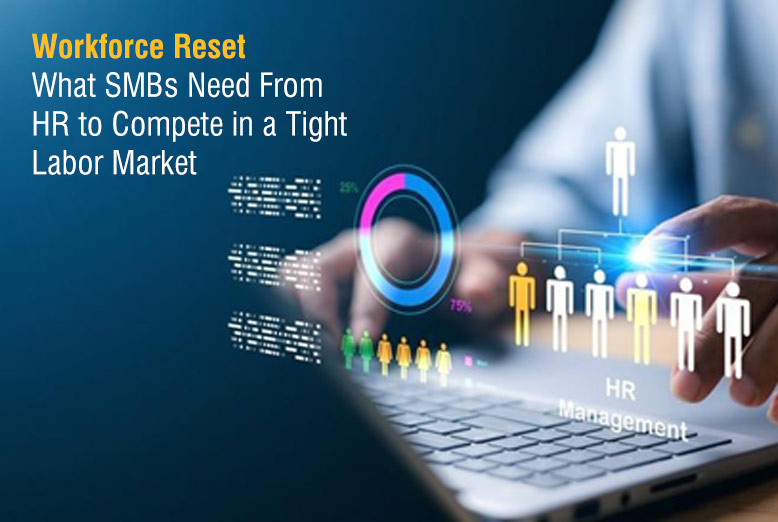
Small and midsize businesses are navigating a labor market that looks very different from just a few years ago. Hiring timelines are longer, employee expectations have evolved, and competition for skilled talent remains intense across many industries. These shifts have prompted many growing businesses to take a closer look at how their human resources functions are structured and supported.
What once worked for managing payroll, benefits, and compliance may no longer scale effectively as organizations grow. Leadership teams are increasingly recognizing that people operations play a meaningful role in long-term stability, not just day-to-day administration. As a result, many businesses are reassessing whether their current HR approach is built to support operational needs, employment regulatory compliance, and future growth.
This article is for informational purposes only and does not constitute legal or HR advice.
The Warning Signs an HR Function Is No Longer Keeping Pace
In early growth stages, HR responsibilities are often handled by a small internal team or shared among leadership. This approach can work for a time, but challenges tend to surface as headcount increases. Missed deadlines, inconsistent onboarding experiences, and delayed responses to employee questions may indicate that existing systems are under strain.
Another common signal is a shift toward reactive problem-solving. When HR efforts are primarily focused on responding to issues after they arise rather than establishing consistent processes, it becomes harder to scale smoothly. Managers may find themselves spending more time addressing employee relations concerns, policy questions, or compliance matters, which can divert attention from strategic priorities.
Recent data from the U.S. Bureau of Labor Statistics shows that job openings continue to outpace hires in many sectors, highlighting the ongoing pressure on organizations to maintain structured and scalable workforce processes.
Why Retention Matters More Than Ever
Hiring challenges are only one part of the equation. Retaining employees has become just as important, particularly as replacement costs continue to rise. Employees today are more likely to seek roles that offer clarity, growth opportunities, and benefits that align with their needs. Some organizations partner with providers that offer employee retention services to support engagement, reduce turnover risk, and create a more consistent employee experience.
Organizations that invest in retention services often see improvements in engagement and continuity. These efforts may include clearer performance expectations, manager support, consistent feedback, and access to benefits that support work-life balance. When employees feel supported, they are more likely to remain committed as the organization grows.
Research indicates that replacing an employee can cost up to nine months of their salary, reinforcing why retention remains both a financial and operational priority as it contributes so much to overall employee turnover costs.
Benefits and Compliance as Strategic Levers
Benefits administration and compliance have become increasingly strategic areas of focus. As regulations evolve and employee expectations continue to rise, these responsibilities require consistent oversight and expertise. Growing businesses may find it challenging to keep pace with changing requirements across states, industries, and workforce models. In many cases, expanding access to ancillary employee benefits allows organizations to offer Fortune 500-level benefits in a way that remains affordable and flexible.
Offering competitive packages that include ancillary employee benefits can help organizations attract and retain talent without needing to match enterprise-level salaries. Voluntary benefits, supplemental coverage, and wellness offerings often contribute to a stronger employee experience while remaining affordable.
At the same time, employment regulatory compliance continues to grow more complex. Wage laws, classification standards, leave requirements, and reporting obligations evolve regularly. Staying aligned with these changes requires proactive monitoring and clear documentation to help maintain compliance and reduce risk. Ongoing attention to employment regulatory compliance helps organizations adapt to changing requirements while maintaining consistency across policies and documentation.
When HR Outsourcing Enters the Conversation
As these challenges add up, many organizations begin evaluating whether their internal HR structure can continue to support growth effectively. For some, exploring HR outsourcing services becomes a strategic consideration rather than a short-term solution. These services can provide access to specialized expertise without expanding internal headcount, helping teams stay focused on core business priorities.
In practice, HR outsourcing services often bring multiple functions together under a single provider. Instead of coordinating between a payroll vendor, benefits broker, compliance partner, and outside counsel for HR-related matters, organizations work with one company that supports payroll administration, benefits management, compliance guidance, and employee relations in a more centralized way.
This consolidated approach can reduce vendor complexity and improve visibility across the employee lifecycle, from onboarding through offboarding. When HR systems are more integrated, leadership teams often gain clearer oversight and greater consistency as the organization grows.
Aligning Workforce Strategy With Business Growth
Resetting an HR approach does not require abandoning existing systems altogether. Instead, it often involves evaluating which functions are best managed internally and which may benefit from external support. Some organizations retain in-house HR leadership while leveraging outside resources for compliance, benefits administration, or retention initiatives.
Others focus on building scalable frameworks that adapt as headcount increases. This may include standardized onboarding processes, clearer career pathways, or improved data tracking to support decision-making. The goal is alignment between workforce strategy and long-term business objectives.
Access to structured HR outsourcing services and targeted employee retention strategies can provide flexibility as organizations respond to evolving labor conditions. When implemented thoughtfully, these resources may support both operational efficiency and employee experience.
Preparing for the Future of Work
Across hiring, retention, benefits, and compliance, scalability remains a common theme for today’s growing businesses. What works for a team of 20 may become difficult to sustain at 50 or 100 employees, particularly in a tight labor market. As expectations continue to evolve, organizations are balancing efficiency with the need to support employees effectively.
HR functions that once operated quietly in the background now play a more visible role in attracting talent, maintaining engagement, and supporting compliance efforts. By recognizing when internal systems need to evolve and taking a proactive approach to workforce strategy, organizations can reset their HR model for a changing labor landscape.
In doing so, they position themselves to support long-term growth, enhance the employee experience, and remain competitive in an increasingly complex market.
Also Read: Why should HR departments consider customized aptitude testing?