A house is far more than an assemblage of timber, drywall, and concrete. It is a living, breathing diary of the people who reside within its walls. When a family thrives, the house seems to stand taller. The paint holds its luster, the lawn is manicured, and the windows catch the morning light. However, when life becomes overwhelmingly difficult, the house often mirrors that internal struggle. The gutters clog with autumn leaves, the foundation settles unevenly, and the paint begins to peel in long, tired strips. In the traditional, polished world of real estate, these are the homes that are actively avoided. They are labeled as liabilities. Agents look past them, and buyers scroll right by them. Yet, beneath the surface of a distressed property lies a profoundly human story. There is always a reason the house fell into disrepair. Often, it is a sudden medical crisis, an unexpected inheritance from a distant relative, a brutal divorce, or a crippling financial hardship. The homeowners in these situations do not need a slick marketing campaign or a traditional listing agent who demands expensive repairs. They need a lifeline.
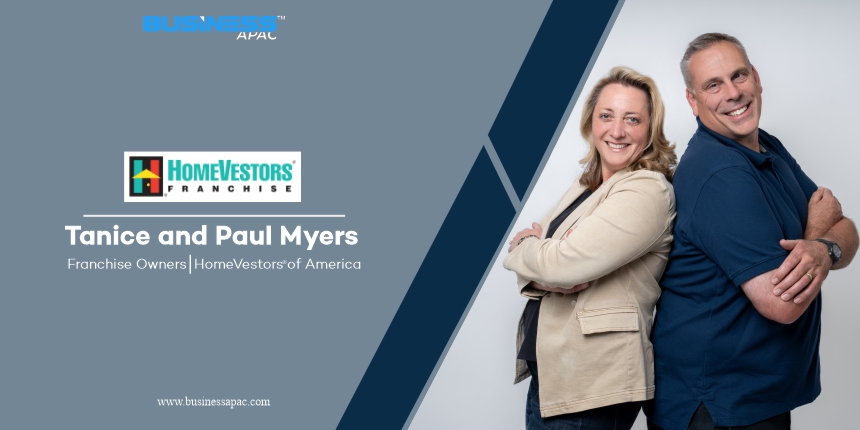
This is the exact arena where Tanice and Paul Myers have chosen to build their legacy. They are not merely real estate investors looking for a quick, detached profit. They are careful observers of human nature, deeply committed to solving complex problems for people who have run out of traditional options. Through their HomeVestors franchises, which include Real Rock, LLC, and their innovative educational platform, Road Warrior Investors (RWI), they have transformed the business of buying distressed properties into a masterclass in empathy and operational excellence. To understand their remarkable journey is to understand the delicate, necessary balance between structural integrity and emotional intelligence.
The Ground beneath Their Feet
Every great partnership is a convergence of distinct, highly specialized histories. For Paul Myers, the foundation was laid in Issaquah, Washington. He was raised by a single mother who instilled in him the unshakeable values of hard work, relentless resourcefulness, and the critical importance of doing things the right way the very first time. He was a curious child, the kind who was constantly taking things apart just to understand how they ticked, dismantling cars, tools, and anything mechanical he could get his hands on. This insatiable curiosity eventually led him to the University of Washington, where he studied Geological Sciences. Here, he managed to combine his profound love of the outdoors with a highly technical interest in how things are built from the ground up.
Following his graduation, Paul spent more than 15 years at Mayes Testing Engineers. He began his career in the dirt as a field technician and methodically worked his way up to the role of business development director. This extensive career provided him with a front-row seat to the complex intersection of construction, safety regulations, soil science, and real-world building practices. He personally inspected thousands of job sites, examining everything from massive foundation pours to intricate commercial projects. This rigorous environment taught him exactly how buildings fail and how they succeed. It taught him that the tiny, hidden details you cannot see are almost always the ones that matter the most.
Tanice Myers arrived at the real estate industry through a different, equally formative path. Her journey actually began long before she ever recognized it as a career. Growing up, she quietly watched her father manage his own rental properties. She witnessed him handling repairs with his own hands, navigating the complexities of working with tenants, and weathering the inevitable ups and downs of property ownership. These early experiences planted the very first seeds of entrepreneurship in her mind. After high school, she attended college briefly but soon realized she was a hands-on learner, driven far more by active curiosity and direct experience than by traditional formal education.
In her early twenties, Tanice earned her real estate license in Washington State and briefly practiced traditional residential real estate. But she was young, and the path to turning that initial passion into a sustainable, scalable enterprise was not yet clear. She pivoted, channeling her energy into building a formidable career in technology. Over a span of 23 years in corporate technology sales, including a pivotal 10 years at Microsoft, she learned how to sit at the table with business leaders, navigate incredibly complex corporate challenges, and guide large teams through periods of constant, disruptive change. She became deeply fascinated by how structure and systems can completely transform business outcomes.
In 2002, these two distinct backgrounds collided perfectly. Tanice and Paul bought their very first rental property together, a small house in Lake Stevens. What started as a single, tentative investment quickly blossomed into a deep fascination with the entire process. They spent their weekends walking through distressed properties, figuring out exactly what it would take to bring them back to life, and realizing the joy of eventually helping families find safe, livable homes. Paul utilized his immense construction background to evaluate the physical structures, knowing exactly how to avoid the costly surprises that sink most amateur investors. Tanice applied her corporate leadership skills, utilizing strategic thinking and process efficiency to organize the effort.
Over the years, that single rental in Lake Stevens evolved into a serious, hands-on career encompassing real estate investing, fixing and flipping projects, and eventually purchasing and renovating homes across multiple competitive markets.
Finding the Ultimate Purpose
In any business, there is a profound difference between knowing what you do and knowing why you do it. The true strategic genius of a visionary leader lies in extracting that core purpose and allowing it to dictate every subsequent decision. For a long time, Tanice and Paul were successfully operating as independent investors. But by 2018, they realized they wanted to scale the impact they were making. They wanted to be part of something much larger than themselves.
That year, they established Fobes Hill, LLC, and became franchise owners with HomeVestors® of America, the company famous for the “We Buy Ugly Houses®” brand. Initially, they viewed the franchise primarily as a strategic mechanism to generate a more consistent lead flow. Like many independent investors, they were successfully closing deals but severely lacked a predictable system for finding motivated sellers. However, what they quickly discovered was that the HomeVestors model offered infinitely more than just a clever marketing engine. It provided a comprehensive framework for holistic success. It taught them that every successful real estate investor needs three critical pillars: Leads, Money, and Education.
As their understanding of this framework deepened, so did their enterprise. Over the years, they have owned three separate HomeVestors franchises. Today, they proudly operate two highly successful entities: Real Rock, LLC, serving the Boise market, and Northern Point, LLC, serving the Seattle market. The decision to align with HomeVestors was both strategic and deeply values-driven.
The corporate mission resonated perfectly with the work they were already doing behind closed doors. They recognized that they were not just fixing drywall and replacing roofs. They were filling a massive gap in the market. Traditional real estate simply did not have a safe place for ugly houses, but the vulnerable people who owned them still genuinely deserved help and respect.
It was during this expansive growth period that they crystallized their ultimate purpose. They realized that their business was built on a very specific hierarchy: people first, process second, profit third. They understood that every single property had a fragile human story attached to it. They were not just buying real estate. They were stepping into living rooms where sellers were overwhelmed by life, offering them a clear, honest path forward.
The Humble Act of Serving
There is an illuminated, profoundly grounded wisdom in true servant leadership. It is the quiet realization of exactly who you are working for. It requires stripping away the ego of the investor and focusing entirely on the humanity of the person sitting across the kitchen table. When you understand that your power, your capital, and your expertise exist strictly to serve the vulnerable, the nature of the transaction fundamentally changes. Empathy ceases to be a corporate buzzword. It becomes the core operating principle.
One particular story beautifully encapsulates this philosophy. Tanice often recalls working with a woman who had spent nearly twenty years faithfully caring for her partner after a devastating accident. It was a life defined by quiet sacrifice. When her partner eventually passed away, the state unexpectedly placed a staggering $400,000 medical lien on their home. The woman was entirely defeated, ready to just walk away from the property with absolutely nothing to show for decades of love and labor.
Most investors would look at a $400,000 lien and immediately walk away, calculating that the margins were impossible. Tanice and Paul did the exact opposite. They leaned in. They connected the grieving widow with a specialized legal team and worked tirelessly until they successfully negotiated the massive lien down to just over $400. That incredible moment had absolutely nothing to do with maximizing their profit margins. It was entirely about restoring a woman’s dignity and granting her the peaceful closure she so deeply deserved. These are the rare, quiet moments that define the true heartbeat of their business.
Paul echoes this sentiment when he discusses the greatest misconceptions surrounding the cash-offer business model. He notes that the public often assumes investors are simply predatory, trying to ‘get a deal’ from homeowners in crisis. The reality is remarkably different. Most of the homeowners they serve are not weighing a cash offer against a top-dollar traditional listing. They completely lack the financial resources, the physical ability, or the emotional bandwidth to even attempt to take the house to the retail market. They are facing brutal life transitions, not calculated real estate decisions.
When Paul sits at a seller’s table, he slows the process down. He walks them through the exact numbers with total transparency, explaining the cost of repairs, the structural concerns, and the real risks involved, just as he would with a professional construction team. When sellers see this technical honesty, they immediately understand that the offer is not arbitrary. It is fair, grounded, and deeply respectful.
The Architecture of Trust
The operational model that allows Tanice and Paul to execute this level of care is vast and meticulously structured. The HomeVestors® is a nationwide network consisting of 900 independently owned and operated franchises. Over the course of nearly 30 years, the “We Buy Ugly Houses” brand has successfully helped more than 150,000 homeowners navigate incredibly difficult situations.
The system is built on speed, absolute simplicity, and profound relief. In a traditional real estate transaction, a homeowner must clean the property, make costly repairs, endure a parade of strangers during showings, negotiate complex contingencies, and agonize over waiting for banks to approve buyer financing. HomeVestors entirely eliminates this friction. They buy houses strictly as-is and with cash.
When homeowners choose to work with Tanice and Paul, they experience something the network calls The HomeVestors® Advantage. This is a structured promise of transparency and respect. First, it offers supreme confidence in the offer. Sellers are granted a three-day unrestricted right to cancel after signing the contract. During this crucial Option Period, the seller can terminate the agreement for any reason whatsoever, simply by notifying the team in writing, whether that is by email, text, or a formal letter. Second, the model offers flexible closing schedules.
Tanice and Paul close strictly on the seller’s timeline, allowing them the breathing room they need to plan their next steps. Third, there are absolutely no closing costs or hidden commissions. Finally, because the sales are entirely as-is, the sellers can completely skip the stress of staging, repairing, and enduring endless inspections. In an industry where speed and profit often trump sincerity, Tanice and Paul deliberately slow down just enough to ensure every single homeowner feels respected, fully informed, and thoroughly supported through one of the most stressful transitions of their lives.
The Road Warriors
As their mastery of the model grew, so did their desire to share their hard-earned knowledge. This desire birthed Road Warrior Investors, affectionately known as RWI. Originally born out of their HomeVestors experience, RWI quickly evolved into something significantly larger. It represents the countless miles driven across state lines, the thousands of people met, and the profound stories that linger in their minds long after a property is sold and the paperwork is filed.
RWI is a dynamic platform dedicated to ‘Edutainment’. Tanice and Paul recognized that traditional, dry real estate seminars fail to capture the gritty, human reality of the business. Instead, they educate the public through real, deeply relatable stories from the field. They produce short skits and compelling storytelling content on platforms like TikTok, Meta, Google, and LinkedIn. By seamlessly blending genuine humor with enormous heart, they share authentic investor insights that resonate with both seasoned professionals and everyday people who are simply curious about what actually happens behind the yellow signs. Through RWI, their primary goal is to conclusively prove that real estate investing is not just about wealth accumulation. It is about generating a positive, lasting impact.
This passion for education naturally extends to their official roles within the corporate network. Tanice and Paul proudly serve as HomeVestors Development Agents. In this highly influential capacity, they act as dedicated coaches and mentors for franchise owners across a massive territory that includes Washington, Idaho, Montana, Utah, and parts of Nevada. They take a highly personalized approach to onboarding, spending intensive one-on-one time understanding exactly what success looks like for each new franchisee.
Many of these new owners are stepping into the unpredictable world of real estate for the very first time, often transitioning away from demanding corporate careers. Paul leverages his years in the trenches to teach them the critical mechanics, from off-market lead generation and contractor relationship management to the technical evaluation of distressed foundations. Tanice utilizes her vast corporate background to help them build robust, predictable systems and cultivate the emotional intelligence required to manage families in crisis.
One of the most fulfilling aspects of their career is watching a new franchisee, who started out juggling a demanding W-2 job, build enough momentum and confidence within a year to step into total financial independence. When these franchisees win, the entire community wins, as more forgotten homes are beautifully restored and more vulnerable families are given a fair, honest way out.
Weathering the Storm
True leadership is invariably tested by unpredictable forces. The real estate landscape has been incredibly turbulent in recent years. Since the onset of the global pandemic in 2020, the industry has been battered by rapidly rising interest rates, severe supply chain shortages, escalating labor costs, and increasingly tight marketing regulations. Furthermore, the space has become hyper-competitive, with a surge of sophisticated investors and wholesalers flooding the market.
Tanice and Paul have navigated these chaotic waters by holding incredibly firm to their ethical standards while simultaneously remaining operationally agile. They place a massive priority on ensuring that every single marketing campaign they run is fully compliant and completely transparent, knowing that integrity is the only sustainable foundation for a lasting reputation.
From a purely business perspective, they have successfully adapted to market shifts by meticulously refining their four primary exit strategies: Assignment of Contract, Hotelling, Fix and Flip, and Buy and Hold. Having multiple exit strategies is absolutely essential for maintaining liquidity and flexibility when the economic winds change. Over the past several years, they have wisely leaned more heavily into lighter rehab projects to ensure faster turnarounds, while strategically taking on occasional large-scale, complex renovations only when the mathematical numbers perfectly align with the risks.
At their core, Tanice and Paul Myers are master builders. They have taken the raw, imperfect materials of their own lives, the technical rigor of soil science, the systemic brilliance of corporate technology, and the quiet lessons learned from a father’s rental properties, and constructed a magnificent enterprise. They have proven that you do not have to choose between profitability and compassion. By leading with empathy, honoring the stories hidden within damaged walls, and serving their communities with absolute humility, they are not just transforming ugly houses. They are fundamentally transforming the very spirit of American real estate.
Learn more at RoadWarriorInvestors.com or follow them on LinkedIn, or YouTube @roadwarriorinvestors.
Quotes
“You don’t have to have everything figured out to take the next step.”
“If you focus on leaving every situation better than you found it—whether that’s a house, a seller, or a business partnership—you’ll be surprised how far that approach will take you.”
Also Read: Partners in Life, Partners in Growth: The Franchise Leaders Transforming Real Estate.