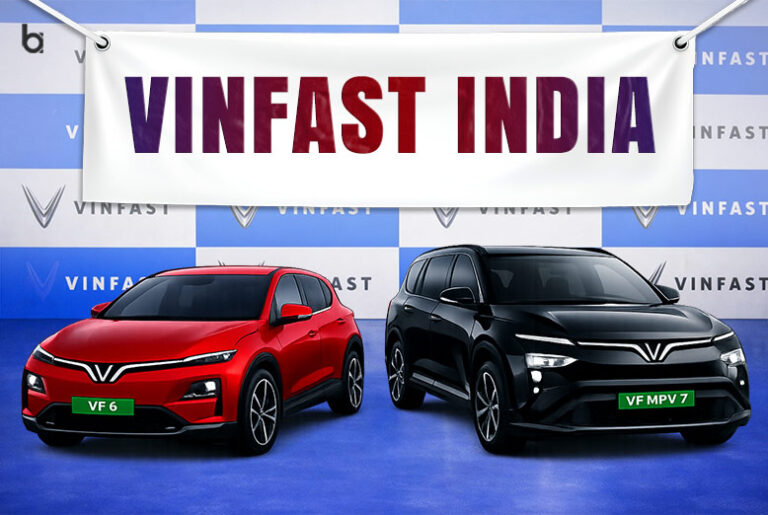
VinFast entered the global EV race in 2017 as part of Vingroup. However, its rise has been unusually fast compared to traditional automakers. VinFast India now marks its most strategic expansion into a high-growth and price-sensitive market.
India stands out because it combines scale, policy push, and rising EV demand. Therefore, global EV players see India as a long-term opportunity. Moreover, VinFast has already exited petrol and diesel vehicles. It operates purely as an electric vehicle brand. This focus gives it a structural advantage in strategy and cost alignment. VinFast India aims to leverage this advantage aggressively.
In addition, the company has already tested global waters in the United States and Europe. However, those markets are saturated and highly competitive. In contrast, India still offers early-stage growth potential. Therefore, VinFast India becomes a calculated and high-stakes move.
To fully understand its impact, one must first examine the entry strategy and long-term positioning.
VinFast India Entry Strategy: More Than Just Cars
VinFast India follows a phased and structured approach. Initially, the company plans to import vehicles through CBU and CKD routes. This allows early market entry without heavy upfront manufacturing costs. However, it will gradually shift towards full localization. This transition reduces costs and improves pricing flexibility.
Moreover, VinFast operates as a pure EV company. Therefore, it avoids legacy inefficiencies linked to petrol or diesel vehicles. In contrast, companies like Tata Motors and MG Motor India still manage mixed portfolios. This difference allows VinFast to focus entirely on EV innovation and cost optimization. VinFast India benefits directly from this clarity.
Another important aspect is its top-down product strategy. The company plans to launch premium SUVs first. These models help build brand perception and trust. After that, it will introduce affordable EVs for mass adoption. This approach mirrors strategies used by global EV leaders.
Key Strategic Pillars
- Phased entry through imports to localization
- Premium-first product rollout
- Strong export orientation
- Focus on mid-segment EV pricing
Additionally, VinFast aims to localize supply chains quickly. This includes batteries, components, and assembly. Therefore, the company reduces dependence on imports over time. VinFast India also aligns with government incentives for local manufacturing.
Central to this strategy is a large manufacturing hub in southern India.
The Tamil Nadu Hub: Manufacturing & Investment Plans
VinFast has committed substantial capital to India. The company announced an initial investment of $500 million. Moreover, total investment may scale up to $2 billion over time. This level of commitment signals long-term confidence in India’s EV future.
The plant is located in Thoothukudi under SIPCOT. This location offers port access and strong industrial infrastructure. Therefore, logistics and export efficiency improve significantly.
Construction of the facility began in February 2024. Production is expected to start by mid-2025. This timeline reflects VinFast’s fast execution model. VinFast India aims to shorten the gap between investment and production.
Key Manufacturing Details
- Land area: around 400 acres
- Initial capacity: 50,000 units annually
- Expandable capacity: 150,000 units annually
- Employment: over 3,500 jobs
Furthermore, the plant supports both domestic and export markets. VinFast plans to use India as a regional export hub. This includes markets in Asia, the Middle East, and Africa. Therefore, India becomes more than just a sales market. It becomes a production base.
From a financial perspective, localization reduces costs significantly. It also protects against currency fluctuations. Therefore, VinFast India can maintain competitive pricing in the long run.
While infrastructure forms the backbone, product lineup drives consumer demand.
The Upcoming VinFast EV Lineup for India
VinFast is not entering India with a single flagship product. Instead, it is deploying a layered EV portfolio strategy. This approach allows the company to target multiple customer segments simultaneously. Therefore, VinFast India reduces dependency on one model and improves its chances of scaling quickly.
Moreover, the lineup reflects a clear segmentation strategy. Each vehicle targets a specific price band, usage pattern, and buyer profile. As a result, VinFast builds both volume potential and brand aspiration at the same time.
1. VinFast VF 6
The VF 6 is expected to be the backbone of VinFast’s India strategy. It targets the mid-size SUV segment, which currently drives EV adoption in urban India.
Key Specifications:
- Expected price: ₹17 to ₹19 lakh
- Battery capacity: 59.6 kWh
- Driving range: around 468 km
- Power output: approximately 201 bhp
The VF 6 balances affordability and performance. Therefore, it directly competes with volume-driven EVs. VinFast India will likely depend on this model for consistent sales.
2. VinFast VF 7
The VF 7 sits slightly above the VF 6 and targets premium SUV buyers. It focuses on performance, design, and advanced features.
Key Specifications:
- Expected price: ₹21 to ₹26 lakh
- Battery capacity: around 70 kWh
- Driving range: about 532 km
- Power output: up to 348 bhp
The VF 7 strengthens brand perception. Although it may not lead in volume, it builds aspiration. Therefore, VinFast India uses it as a halo product in the mid-premium EV space.
3. VinFast VF 3
The VF 3 represents VinFast’s entry into the affordable EV segment. It is compact, urban-focused, and highly practical.
Key Specifications:
- Expected price: around ₹7.5 lakh
- Segment: micro SUV
- Launch timeline: late 2026
The VF 3 can become a mass-market disruptor. It targets first-time EV buyers and city commuters. Therefore, VinFast India may use it to expand EV adoption at scale.
4. VinFast VF e34
The VF e34 has already proven itself in global markets. It focuses on practicality and efficiency rather than premium positioning.
Key Specifications:
- Expected price: around ₹12 lakh
- Segment: compact crossover
- Launch timeline: mid-2026
This model suits fleet operators and ride-sharing platforms. Therefore, VinFast India can tap into commercial EV demand using this vehicle.
5. Premium and Niche Models
VinFast also plans to introduce higher-end models to complete its portfolio.
Expected Offerings:
- VF 8 priced around ₹50 lakh
- VF 9 priced around ₹70 lakh
- MPV 7 priced around ₹19.9 lakh
These models are not volume drivers. However, they play a critical role in shaping brand perception. Therefore, VinFast India uses them to build credibility and aspirational value.
The Game Changer: Battery Subscription & Pricing Strategy
VinFast’s pricing strategy introduces a structural shift in how EVs are sold. Globally, the company has experimented with a battery subscription model. This approach separates the battery cost from the vehicle price. Therefore, it directly addresses one of the biggest barriers to EV adoption, which is high upfront cost.
In a traditional EV purchase, the battery contributes nearly 30 to 40 percent of the total cost. However, VinFast removes this burden from the initial purchase. Customers pay a lower vehicle price and then subscribe to the battery through a monthly fee. Therefore, the ownership model becomes closer to a service rather than a one-time purchase. VinFast India may adopt a modified version of this strategy depending on local market conditions.
This model offers several advantages. First, it reduces the entry barrier for new buyers. Second, it transfers battery degradation risk to the manufacturer. Third, it allows customers to upgrade or replace batteries more easily. However, it also introduces recurring costs. Therefore, long-term affordability depends on pricing structure and usage patterns.
From a competitive standpoint, VinFast positions its core models between ₹17 lakh and ₹26 lakh. This places the VinFast VF 6 and VinFast VF 7 directly against offerings from Tata Motors and MG Motor India. However, VinFast differentiates itself through features, design, and ownership innovation.
Financially, this strategy reflects a long-term revenue model. Instead of relying only on one-time sales, VinFast builds recurring income streams. Therefore, VinFast India aligns its pricing strategy with both customer affordability and business sustainability. This dual focus can become a major competitive advantage if executed well.
Infrastructure & After-Sales: The V-Green Ecosystem
Infrastructure remains one of the biggest barriers to EV adoption in India. Therefore, VinFast has taken a proactive approach by building a comprehensive ecosystem. Instead of relying entirely on third-party networks, the company plans to develop its own integrated support system. VinFast India views infrastructure as a core pillar, not an afterthought.
The company has already outlined aggressive expansion plans. Initially, it aims to establish more than 25 dealerships and over 80 service centers. Over time, this network may scale to 100 to 300 outlets. Therefore, VinFast ensures accessibility across major urban and semi-urban regions. This rapid rollout strategy builds early customer confidence.
In addition, VinFast is exploring partnerships with Hindustan Petroleum Corporation Limited. Such collaborations can accelerate charging infrastructure deployment. Oil marketing companies already have wide retail networks. Therefore, integrating EV chargers into these networks improves convenience for users.
Another critical factor is after-sales reliability. VinFast offers up to a 10-year warranty globally. This warranty exceeds industry norms and reduces ownership anxiety. Therefore, it acts as a strong trust signal for first-time EV buyers.
From a strategic lens, VinFast’s ecosystem approach reduces dependency on external infrastructure. It also creates a controlled customer experience. VinFast India ensures that buyers receive consistent service quality across locations.
Moreover, this ecosystem supports long-term brand building. Customers do not just buy a car. They enter a complete ownership network. Therefore, VinFast positions itself as a full-service EV provider rather than a traditional automaker.
Competitive Landscape: VinFast vs The Big Three
VinFast enters India at a time when the EV market is evolving rapidly. However, competition is already intense. The key players include Tata Motors, Mahindra & Mahindra, and MG Motor India. Each of these companies holds a distinct position in the market.
Tata Motors leads in EV volume with strong localization and pricing advantages. Mahindra focuses on SUVs and upcoming electric platforms. MG Motor India offers feature-rich EVs with global design appeal. Therefore, VinFast India enters a market with well-established competitors.
However, VinFast brings a different strategic approach. It operates as a pure EV company without legacy constraints. Therefore, it can allocate resources entirely towards electric mobility. Additionally, strong financial backing from Vingroup provides stability and scale.
SWOT Analysis
Strengths
- Pure EV focus
- Fast execution capability
- Global experience
Weaknesses
- Low brand awareness in India
- Limited initial dealership network
Opportunities
- Rapid EV adoption growth
- Government incentives
- Rising fuel costs
Threats
- Price-sensitive consumer base
- Strong domestic competition
- Infrastructure gaps
Early reports suggest VinFast achieved over 1,000 unit sales in a short period. This indicates initial market acceptance. However, sustaining growth will require consistent performance. VinFast India must deliver on pricing, service, and reliability simultaneously.
Ultimately, competition in India depends on execution rather than intent. VinFast has the resources and strategy. However, long-term success will depend on how effectively it adapts to local market dynamics.
Is India Ready for VinFast?
VinFast India enters the market with ambition, capital, and clarity. The company aligns its strategy with India’s EV growth trajectory. Moreover, its investment of up to $2 billion reflects long-term commitment.
However, the Indian market demands execution discipline. Pricing must remain competitive, and localization must progress quickly. Infrastructure expansion will also determine customer trust.
From a strategic perspective, VinFast has entered at the right time. EV adoption is rising, and policy support remains strong. Therefore, early movers can establish strong market positions.
The long-term success of VinFast India will depend on its ability to scale operations efficiently. It must also adapt its global strategies to local conditions.
In conclusion, VinFast India stands at a decisive moment. It has the potential to reshape the EV landscape. However, only consistent execution will convert potential into leadership. The coming years will reveal whether this Vietnamese entrant becomes a dominant force or remains a niche player.
Tejas Tahmankar