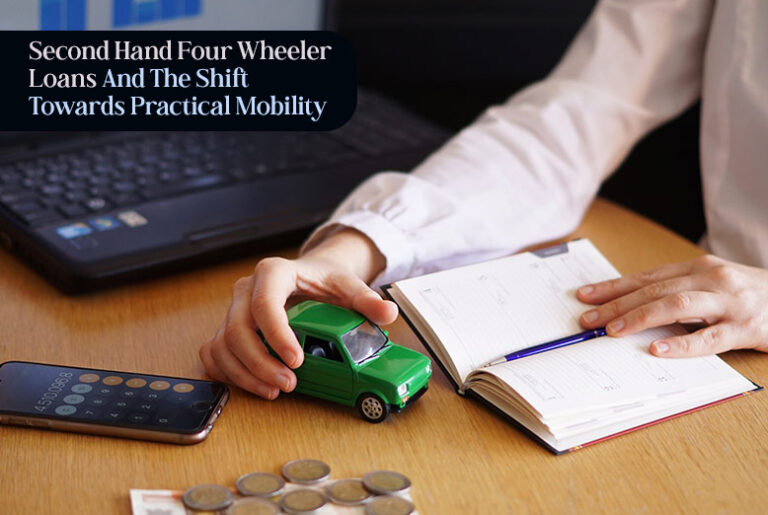
Car ownership in India is becoming more value-driven as buyers look beyond model appeal and focus on everyday usefulness. For many households, a four wheeler now means safer commutes, easier family travel, better access to work, and greater control over daily movement.
This practical shift is strengthening the used-car market, which is estimated to grow to USD 82.88 billion by 2031. Higher new-car prices, digital discovery, improved financing access, and changing replacement cycles are making pre-owned vehicles more relevant for budget-conscious buyers.
A second-hand four-wheeler loan fits into this shift by helping buyers plan ownership through structured repayments instead of one large upfront payment.
Let us learn how this financing option supports practical mobility and smarter used-car ownership.
Why Practical Mobility is Becoming More Important
Practical mobility means choosing a vehicle based on daily usefulness, ownership cost, and repayment comfort. For many households, a car supports office commutes, school travel, medical visits, family outings, and business trips.
This has changed how buyers view used cars. A pre-owned four wheeler can offer personal mobility at a lower entry cost than a new car. Crisil expects used-car volumes in India to grow by 8-10% in FY26, supported by value-conscious demand, digital adoption, and improved access to finance.
Why Used Cars Fit Value-led Ownership
Used cars appeal to buyers who want affordability without giving up everyday utility. The lower purchase price can help first-time buyers, growing families, and two-wheeler owners move towards car ownership.
However, value depends on the vehicle’s age, mileage, service history, insurance status, and expected maintenance needs. A second hand four wheeler loan becomes useful when the car, repayment plan, and ownership period make sense together.
How Financing Makes The Purchase More Planned
A used-car purchase still involves a down payment, insurance, transfer charges, repairs, tyres, servicing, and registration-related costs. A secondhand four wheeler loan helps spread this cost across a defined tenure, making repayment easier to plan.
Buyers should not judge the loan only by the Equated Monthly Instalment (EMI). A lower EMI may increase total repayment if the tenure is longer. The right structure should balance loan amount, down payment, tenure, charges, income, and expected vehicle use.
Why Vehicle Quality Shapes Loan Decisions
Used-car value depends heavily on condition, records, and maintenance history. A lower price may look attractive, but poor upkeep can increase ownership costs after purchase. Buyers should check service history, accident records, tyre condition, engine performance, battery health, insurance validity, and pending hypothecation.
A second hand four wheeler loan should be planned only after verifying the vehicle’s real value. A well-maintained car with clear documents can offer better long-term value than a cheaper car with unclear records.
How Digital Access Has Changed Used-Car Buying
Digital platforms have made used-car research more transparent. Buyers can compare models, price ranges, estimated EMIs, seller types, vehicle age, and fuel options before visiting a dealer. This supports better decision-making by allowing buyers to shortlist vehicles within a practical budget. It also reduces dependence on a single seller’s information.
A second hand four wheeler loan also becomes easier to evaluate when buyers compare finance terms early. They can understand possible repayment ranges before finalising the vehicle. Still, digital convenience needs caution. Buyers should verify the seller’s credibility, vehicle papers, payment route, and lender details before sharing personal or financial information.
What Buyers Should Check Before Applying For A Second Hand Four Wheeler Loan
Before applying, buyers should review the vehicle, loan terms, and ownership costs together. This helps them choose a car that fits their usage, budget, and repayment comfort.
- Understand the Main Use of the Vehicle
Buyers should decide how the car will be used. City commutes, school runs, business visits, and intercity travel require different types of vehicles. A compact car may suit daily urban travel, while a larger vehicle may be better for family use.
- Check the Total Cost of Ownership
The listed price is only one part of the cost. Buyers should calculate insurance, fuel, servicing, repairs, tyres, parking, and transfer charges. A second hand four wheeler loan should fit the full ownership cost, not only the monthly EMI.
- Review Vehicle Condition and Documents
Vehicle condition affects long-term value. Buyers should check service history, accident records, insurance validity, registration certificate, pollution certificate, and pending hypothecation. A well-documented car can reduce repair risk and make ownership more predictable.
- Compare Loan Terms Beyond Interest Rate
Interest rates matter, but tenure, processing fees, prepayment rules, late payment charges, and documentation also affect costs. A lower EMI may increase total repayment if the tenure is longer. Buyers should compare the full loan structure.
- Keep a Post-purchase Budget Ready
Used cars may need servicing, insurance renewal, minor repairs, tyre checks, or accessory upgrades after purchase. Buyers should keep a separate budget for these costs. This prevents ownership from becoming stressful after delivery.
Choose Used Vehicle Finance With Better Cost Clarity
Used-car ownership is becoming more practical as buyers seek mobility that fits their daily needs and monthly budgets. A second hand four wheeler loan can support this shift when borrowers evaluate the car, loan, and ownership costs together.
The right approach begins with checking vehicle quality, ownership records, repayment capacity, and total cost. Financial institutions like Muthoot FinCorp Ltd. can help borrowers explore structured vehicle finance with better clarity and support.
A second hand four wheeler loan works best when it improves mobility without disturbing monthly cash flow. Compare vehicles, review loan terms, and choose financing that makes ownership practical.
Disclaimer: The content is intended solely for general educational and informational purposes and should not be construed as a loan offer, solicitation, financial advice, or a commitment to provide any product or service. It may also specify that loan eligibility, interest rates, charges, documentation requirements, product features, and other applicable terms are subject to the relevant regulatory guidelines, Muthoot Fincorp Ltd.’s internal policies, and the terms and conditions of the respective product.
Also Read: List of Top 10 NBFCs in India Financing Growth for a Strong Economy